
Architecture · 18 August 2026
Before the Curtain Rose

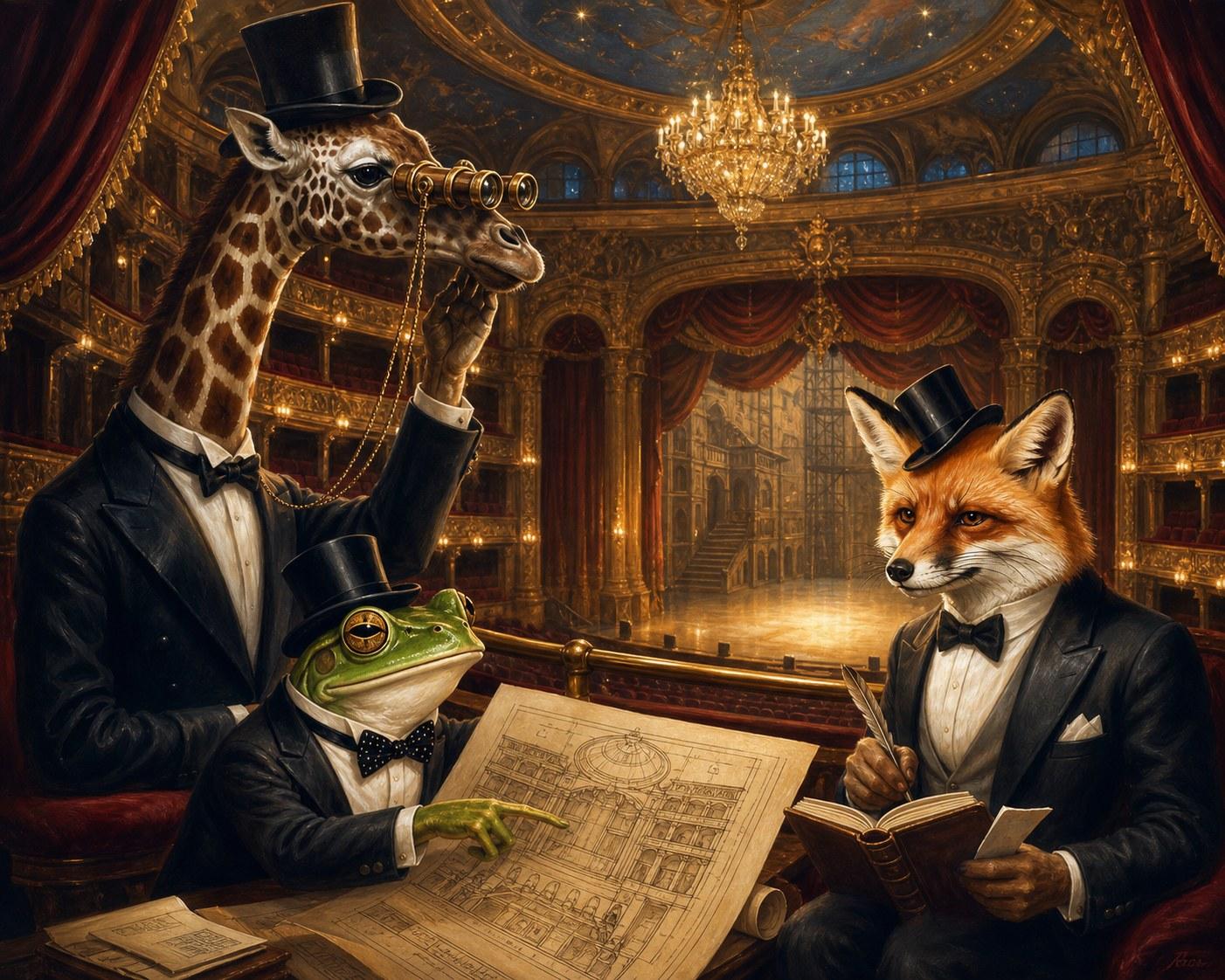
Long before its chandeliers were lit or its first orchestra assembled, the Grand Theatre began with a disagreement.
Professor Edmund Ribbington believed the stage should face east, allowing the morning light to fall across rehearsals. Lord Sebastian Longstride argued—politely but persistently—that theatres belonged to the evening and should be designed accordingly.
Professor Archibald Foxworth arrived carrying plans of three ancient playhouses. Lord Reginald Snapworth arrived carrying the proposed budget. Of the two documents, Edmund later recalled, the historical plans caused considerably less alarm.
The discussion continued until a young stagehand pointed towards an unused courtyard wall. Its position would shelter arriving audiences from the wind while allowing the auditorium to catch the last light of day.
Edmund quietly turned his plans around.
The theatre was built on that new alignment and has welcomed audiences ever since. Above the backstage entrance, a small stone inscription records the lesson Professor Ribbington considered more important than his original design:
“A fine building begins with a vision. A lasting one leaves room for a better idea.”